What fermenting taught me about patience
The first jar went grey, the second exploded, the third was the best thing I ate all year.

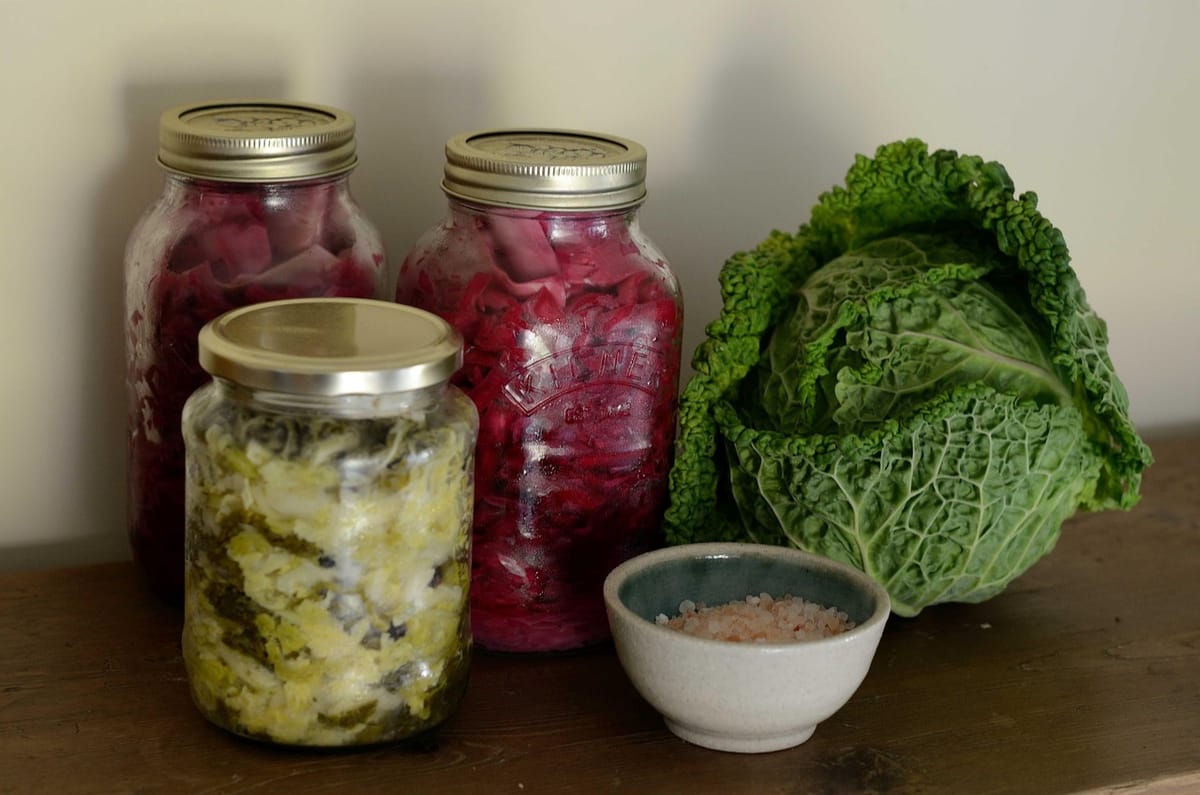
The first jar of sauerkraut I made went grey and smelled like a changing room. The second exploded in the cupboard. The third was the best thing I had eaten all year. Between the first jar and the third, I learned more about patience than in a decade of trying to meditate.
Salt, cabbage, time
Sauerkraut is the simplest ferment there is: cabbage, salt and nothing else. You slice the cabbage thinly, add two per cent of its weight in salt, squeeze it with your hands until it gives up its water, and press it into a jar under its own juice. Then you wait.

The waiting is the whole recipe. Bacteria that are already on the leaves turn the sugars into acid, and the acid preserves the cabbage and gives it its sour, clean taste. You cannot hurry it. Warmer rooms are faster, but faster is rarely better. ((My best batch took five weeks in a cold pantry in February. It tasted of apples, somehow.))
What went wrong, and why
- Grey and smelly: the cabbage was not under the brine. Anything exposed to air grows the wrong things.
- Exploding jar: I sealed it tight. Ferments make gas, and gas needs somewhere to go.
- Soft and mushy: too warm, too little salt, or both.
Every failure had the same cause: I tried to control the ferment instead of setting it up and leaving it alone.
Kimchi, and learning to taste

Kimchi taught me to taste. Unlike sauerkraut, it changes fast and shows it: crisp and fresh on day two, sour and deep on day seven, almost fizzy after two weeks. I started tasting a jar every morning with a clean fork and writing a word in a notebook. After a month I had a vocabulary for sour that I did not know I needed.
Fermenting is cooking with time as the main ingredient. You cannot buy more of it.
The shelf
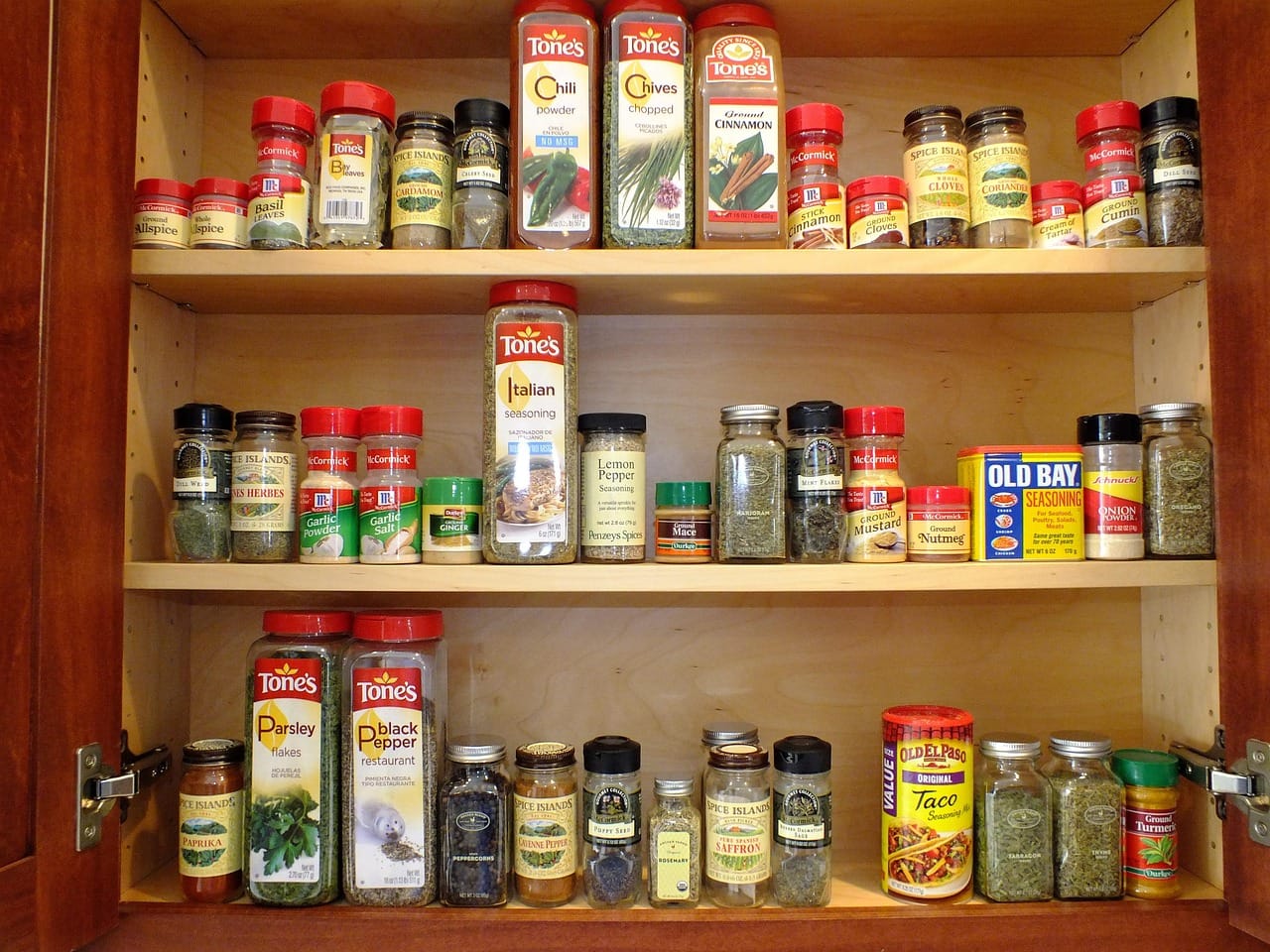
These days there is a shelf in the pantry that is always busy. Sauerkraut in winter, preserved lemons in spring, cucumbers in summer, chilli sauce in autumn. Each jar has a strip of tape with the date on it, and most weeks something new goes in and something finished comes out.
What it taught me
I am an impatient person. I check things too often, I pull cakes out of the oven early, and I reply to messages before I have finished reading them. A jar of cabbage in a dark cupboard does not care about any of that. It will be ready when it is ready, and opening it every day only lets the air in.
That is the lesson, and I am still learning it: do the setup carefully, then trust the process, and look less often than you want to.
Starting your first jar
If you want to try, start with sauerkraut in a one-litre jar. One small white cabbage, about 800 grams once the outer leaves are gone, and 16 grams of salt. Slice it thinly, massage it with the salt for ten minutes until it is wet and limp, and press it into the jar hard enough that the brine rises over the top. Put a small bag of salty water on top as a weight, cover it loosely, and put it somewhere cool and dark.
Taste it after a week, and then every few days. When it tastes right to you, put the lid on and move it to the fridge, where it keeps for months. Your first batch will teach you more than any book, including this post.
Sharing jars
The best thing about fermenting is that it makes too much. Every few weeks a jar goes to a neighbour, a friend, or the Sunday table. People who say they do not like sauerkraut have usually only eaten the pale, vinegary kind from a tin. ((Ruth was one of them. She now asks for a jar every month and pretends it is for her husband.))
The science, briefly
The bacteria doing the work are mostly lactobacilli, the same family found in yoghurt. Salt slows down the organisms that cause rot, but lactobacilli tolerate it well, so they win the race. As they eat the sugars in the vegetables, they make lactic acid, and the rising acid makes the jar a place where almost nothing harmful can grow. That is why a ferment gets safer as it gets more sour, and why fermenting has kept food through winters for thousands of years.